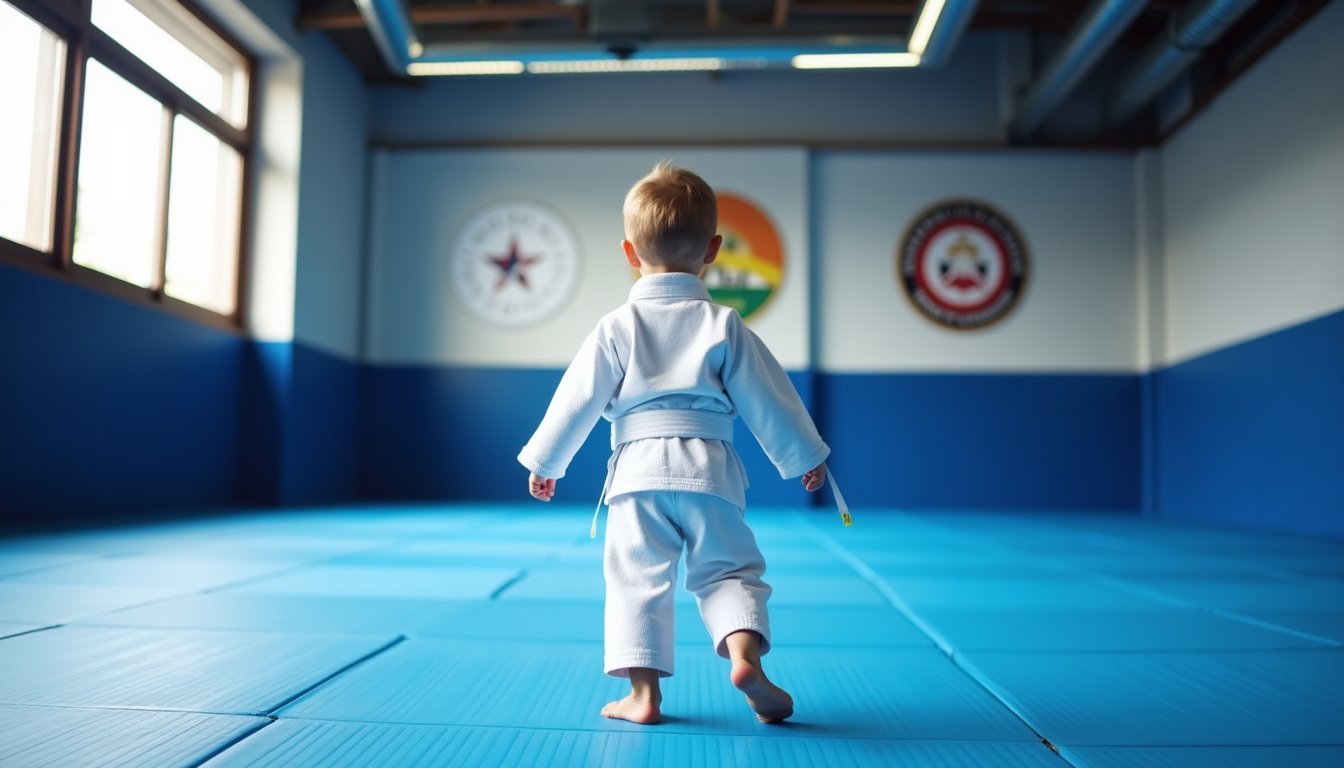
The best age to start BJJ for most children falls between 4 and 6 years old, when they can follow basic instructions, maintain focus for 30-minute sessions, and understand simple cause-and-effect relationships on the mat. Some academies accept students as young as 3, while others recommend waiting until 5 or 6 depending on the child's physical coordination and attention span.
This decision matters because starting at the right developmental stage sets your child up for long-term success, confidence, and injury prevention. Parents searching for the ideal enrollment window want to balance early skill development with their child's readiness to learn.
Why age 4-6 is the sweet spot for beginning training
Children in this age range typically reach several developmental milestones that align perfectly with beginner BJJ instruction. Their gross motor skills allow them to perform basic movements like shrimping, forward rolls, and maintaining base on hands and knees.
At this stage, most kids can listen to a coach for short periods, follow two-step directions, and begin to understand turn-taking during partner drills. They're also developing the body awareness needed to recognize where their limbs are in space—crucial for learning positions and transitions.
You'll notice that 4-year-olds need more frequent activity changes and shorter drills than 6-year-olds, which is why quality programs adjust class structure by age group. A well-designed kids' class for this range keeps each activity to 3-5 minutes before switching to maintain engagement.
Signs your child is developmentally ready to begin
Age is just one factor. Watch for these readiness indicators before enrolling your child, even if they fall within the typical range:
If your child doesn't check all these boxes, that doesn't mean they'll never succeed in BJJ. It simply suggests waiting a few more months and reassessing, or starting with a trial class to see how they respond to the academy environment.
What happens when children start too early
Enrolling a child before they're ready creates frustration for everyone involved. The most common issue is attention span—children under 3 or immature 3-year-olds often can't focus long enough to learn even basic positions, turning class time into unstructured play.
This isn't necessarily bad, but it means you're paying for what amounts to active daycare rather than martial arts instruction. Some parents are fine with this as a socialization experience, while others prefer to wait until their child can actually absorb technique.
Another problem with starting too young is injury risk from insufficient body control. A child who can't reliably stop their forward momentum or control their limbs during rolling may accidentally knee a training partner in the face or twist their own ankle during a scramble.
The emotional component matters too. Children who aren't ready for the structure may develop negative associations with training, making it harder to re-engage them later when they would naturally thrive in the program.
The case for waiting until age 7 or 8
Some families intentionally delay BJJ enrollment until their child is older, and this approach has clear advantages. Seven- and eight-year-olds generally have longer attention spans, better impulse control, and more developed problem-solving abilities than younger children.
These students often progress faster through the curriculum because they can retain multi-step techniques, understand strategic concepts like creating angles or controlling distance, and self-correct based on feedback. They're also more likely to practice at home if they're motivated.
Starting later doesn't mean starting behind. A focused 8-year-old can often catch up to peers who began at 5 within a year or two, especially if those younger students took breaks or lost motivation during early training.
The main consideration is whether your child shows interest in martial arts during those earlier years. If they're asking to try BJJ at 5, there's no strong reason to make them wait until 8 just for the sake of cognitive development—engagement and enthusiasm matter more than optimal learning efficiency.
How different age groups experience BJJ training
Understanding what training looks like at each stage helps you set realistic expectations for your child's experience and progress.
| Age Range | Typical Class Focus | Attention Span | Technical Retention |
|---|---|---|---|
| 3-4 years | Games, basic movement patterns, following directions | 10-15 minutes per activity | Low; repetition across many sessions needed |
| 5-6 years | Fundamental positions, simple escapes, partner drills | 15-20 minutes per activity | Moderate; can remember 2-3 techniques with practice |
| 7-9 years | Position flow, submission concepts, light positional sparring | 20-30 minutes per activity | Good; retains sequences and starts connecting movements |
| 10-12 years | Strategic thinking, competition preparation, technical refinement | 30+ minutes per activity | High; can drill independently and troubleshoot problems |
These ranges overlap and individual children vary, but the progression shows why age-appropriate instruction matters. A 4-year-old in a class designed for 9-year-olds will feel lost, while a 10-year-old in a class of 4-year-olds will feel unchallenged.
Step-by-step process to determine the best age to start BJJ for your child
Common mistakes parents make about starting age
One frequent error is enrolling multiple siblings together when they're at very different developmental stages. A mature 6-year-old and an immature 4-year-old shouldn't necessarily be in the same class just because it's more convenient for drop-off.
Another mistake is comparing your child to others at the academy. You might see a 3-year-old thriving in class and think your 3-year-old should too, but that child may be an outlier in terms of focus and coordination. Use your own child as the reference point, not someone else's.
Many parents also underestimate the importance of the instructor's experience with young children. A black belt who primarily teaches adults may not have the skills to engage a room of 4-year-olds, while a purple or brown belt who specializes in kids' instruction might be far more effective for your child's age group.
Pushing a reluctant child to continue because you've already paid for a membership creates negative associations with training. If your child genuinely dislikes it after a fair trial period (8-12 classes), it's better to pause and try again in six months than to force attendance.
What to look for in a program for young beginners
The right academy for a young child prioritizes safety, engagement, and age-appropriate progression over competition results or rushing students through curriculum. Here's what quality programs offer:
During your academy visits, watch how the instructor redirects off-task behavior. Do they use positive language and re-engagement, or do they rely on criticism and consequences? Young children respond better to coaches who make the activity itself interesting rather than those who manage behavior through control.
How to support your child once they start training
Your role as a parent significantly impacts your child's experience and longevity in BJJ. The best thing you can do is show consistent interest without applying pressure about performance or outcomes.
Ask open-ended questions after class like "what was the most fun part today?" or "what did you learn?" rather than "were you the best one?" or "did you win?". This keeps the focus on skill development and enjoyment rather than comparison to others.
Make attendance as routine as possible. Children thrive on predictability, so training on the same days at the same times each week helps them mentally prepare and builds the habit. Random, inconsistent attendance makes it harder for them to progress and feel connected to their training partners.
Resist the urge to coach from the sidelines. If you're staying to watch, observe quietly and save any comments for later. Your child needs to learn to listen to their instructor during class, and competing voices create confusion.
When your child shows frustration—and they will, because learning physical skills involves failure—acknowledge the feeling without dismissing it or solving the problem for them. "I see you're frustrated that move didn't work. What do you think you could try differently next time?" teaches problem-solving.
Physical and cognitive benefits by starting age
Children who begin BJJ in the 4-6 age range develop foundational movement patterns during a critical window for motor skill acquisition. They build strength, balance, and coordination alongside technical skills, which serves them in all physical activities throughout life.
These early starters also learn social skills like cooperation, respect for rules, and how to handle controlled physical contact in a safe environment. For children who struggle with impulse control or aggression, BJJ provides an outlet where physicality has clear boundaries and consequences.
Starting slightly older, around 7-9, means children can grasp strategic and tactical elements of technique more quickly. They understand concepts like leverage, weight distribution, and creating advantageous positions, which accelerates their technical progression even if they have less training time.
Both paths lead to the same long-term benefits—confidence, resilience, problem-solving ability, and physical literacy. The difference is in the learning curve and the specific developmental windows you're utilizing.
When to reconsider or take a break from training
Not every child will love BJJ, and that's perfectly fine. If your child consistently resists going to class, complains throughout the session, or shows no improvement in engagement after 3 months of regular attendance, it may be time to pause.
This doesn't mean giving up forever. Many children return to BJJ after a year or two away and suddenly click with it because they've matured. Forcing a child to continue when they're genuinely unhappy often backfires, creating lasting negative associations.
Some children need a break after an injury, even a minor one, to rebuild confidence on the mat. Pushing them back too quickly can create anxiety around certain movements or positions. A few weeks or months off is better than permanent fear.
Life circumstances also play a role. If your family schedule becomes overloaded with activities and training feels like one more obligation rather than something your child looks forward to, reducing frequency or taking a season off preserves the positive relationship with BJJ.
How starting age affects competitive timeline and goals
Parents sometimes worry that starting at 6 instead of 4 means their child will be "behind" if they want to compete. In reality, competition readiness depends more on consistent training and individual aptitude than starting age.
Most academies introduce students to competition around age 7-8 regardless of when they started, because that's when children typically have the emotional regulation to handle winning and losing productively. A child who started at 4 with sporadic attendance won't be more ready than one who started at 6 with consistent training.
For children interested in competing seriously, the focus should be on quality training and technical development in the years before adolescence, not on accumulating medals. The skills and work ethic built during this period determine success far more than the number of years on the mat.
If competition isn't a goal at all, starting age matters even less. Recreational students who train 2-3 times per week will progress steadily and gain all the physical, mental, and social benefits of BJJ whether they start at 4, 7, or 10.
Future expectations for kids' BJJ enrollment trends
The growing awareness of BJJ's benefits for child development is likely to increase enrollment in younger age groups over the coming years. More academies are developing specialized programs for preschool-aged children with appropriate curriculum and instructor training.
Parents are also becoming more educated about the importance of readiness indicators rather than just age, which means fewer children will be enrolled before they're truly ready. This shift toward developmental appropriateness should improve retention rates and long-term student satisfaction.
We're also seeing more integration between BJJ training and other aspects of child development. Some academies are consulting with child psychologists and physical therapists to optimize programs for different age groups, which will make training more effective and safer.
Technology will play a role too, with video analysis and skill-tracking apps helping younger students and their parents see progress more clearly. Visual feedback particularly helps children understand what they're doing right, which supports motivation and engagement.
Key takeaways for deciding when to enroll
The decision about when to start BJJ depends on your individual child's development, interest level, and readiness for structured group instruction. Age provides a guideline, but it shouldn't override observation of your child's actual capabilities and enthusiasm.
Practical checklist for starting your child in BJJ
The next step is to schedule those academy visits and trial classes. Trust your observations of your child more than any external pressure about the "right" age, and you'll make the decision that sets them up for success on and off the mat.
Step-by-step process to determine the best age to start BJJ for your child
Follow these steps to make an informed decision about when to enroll your child in Brazilian Jiu-Jitsu training.
- Observe your child's developmental milestones. Check whether they can follow two-step instructions, separate from you for 30-45 minutes without distress, and demonstrate basic body awareness during active play.
- Visit local academies and watch kids' classes in action. Pay attention to how instructors manage different age groups, the class structure, and whether the youngest students stay engaged throughout the session.
- Schedule a trial class within your child's age bracket. Most gyms offer free or low-cost trial sessions that let you see how your child responds to the mat environment, the coach's teaching style, and interaction with other students.
- Assess your child's reaction after the trial session. Ask them what they liked, what felt hard, and whether they want to return—genuine enthusiasm is a strong indicator of readiness.
- Consider starting with a short-term commitment first. Enroll for one or two months instead of a full year to evaluate whether your child maintains interest and shows progress before making a longer financial commitment.
- Re-evaluate every few months during the first year. Watch for signs of burnout, persistent frustration, or loss of interest, and be willing to take a break and restart when your child is more developmentally prepared.
Frequently asked questions
What is the youngest age a child can start BJJ?
Most academies accept children as young as 3 years old, though success at this age depends heavily on the individual child's focus and coordination. Many programs recommend waiting until 4 or 5 for more productive learning.
Is 8 years old too late to start Brazilian Jiu-Jitsu?
Eight years old is not too late at all—many children start at this age and progress quickly due to better focus and problem-solving skills. Students who begin at 8 often catch up to younger starters within a year or two of consistent training.
How many classes per week should a beginner child attend?
Beginner children typically do best with 2-3 classes per week, which provides enough repetition for skill development without causing burnout. One class per week usually isn't enough for meaningful progress, while more than three can overwhelm younger students.
Can my 4-year-old train with my 7-year-old in the same class?
Most quality programs separate these age groups because their developmental needs and attention spans differ significantly. Some academies offer family classes where siblings train together, but the primary instruction should be age-appropriate.
What if my child is small for their age—should I wait?
Size matters less than developmental readiness in terms of coordination, focus, and body awareness. Small children can absolutely succeed in BJJ, and the sport actually helps them learn to use technique rather than rely on size or strength.
How long does it take for a child to feel comfortable in class?
Most children need 4-6 classes to adjust to the routine, environment, and expectations of BJJ training. Some adapt immediately, while others take 10-12 sessions to feel fully comfortable participating without hesitation.
Do I need to stay and watch my child's class?
For very young children (4-5 years old), staying for the first few classes helps with separation anxiety. Once your child is comfortable, many academies prefer parents to drop off and return later, as watching can distract younger students.
What if my child cries or refuses to participate during class?
Occasional resistance is normal during the adjustment period. Give it a few more tries, but if your child consistently cries, refuses to engage, or shows signs of genuine distress after 6-8 classes, they may not be ready yet.
Can children with attention difficulties succeed in BJJ?
Many children with ADHD or attention challenges thrive in BJJ because the physical nature of the activity provides sensory input and the structure provides clear boundaries. Work with an instructor experienced with diverse learners for best results.
How do I know if the instructor is good with young children?
Watch for positive reinforcement, patience during redirection, ability to keep all students engaged, and clear communication using age-appropriate language. Good instructors also maintain control without being harsh or intimidating.
Should my child do other sports in addition to BJJ?
Cross-training with other activities can be beneficial, building overall athleticism and preventing burnout. Just avoid overloading your child's schedule—two activities total usually works better than four or five for elementary-aged children.
What if my child wants to quit after a few months?
Distinguish between temporary frustration and genuine dislike. If they're struggling with a specific skill, encourage persistence for a few more weeks. If they consistently express unhappiness despite progress, consider taking a break and trying again later.
Do boys and girls start at different ages?
Developmental readiness doesn't differ by gender—both boys and girls should start based on the same readiness indicators. Some girls may mature slightly faster in terms of focus and following directions, but this varies by individual.
How much does kids' BJJ typically cost per month?
Kids' BJJ programs vary widely by location and academy, so contact your local schools directly for current pricing. Costs generally cover unlimited or set number of classes per week, and many academies offer family discounts.
Will my child learn self-defense right away?
Self-defense concepts are introduced gradually through technique, but young beginners primarily focus on fundamental movements, positions, and body awareness. Practical self-defense application develops over time as skills compound.
Can starting too young cause injuries?
Injuries are rare in well-supervised kids' BJJ programs at any age. The main risk of starting very young is that insufficient body control leads to accidental impacts, which is why age-appropriate instruction and proper supervision are essential.
Should I enroll my shy child in BJJ to build confidence?
BJJ can absolutely help shy children develop confidence through mastering skills and positive social interaction. Start with a trial class to ensure the environment feels safe and supportive rather than overwhelming for your child's temperament.
What happens if my child misses several weeks of class?
Missing a few weeks won't erase previous learning, though your child may need a refresher session when they return. Extended absences (more than a month) can require relearning basics, especially for younger children with less retention.
Do children need to compete to advance in rank?
Most kids' BJJ programs do not require competition for belt promotion. Advancement is based on technical proficiency, time in training, and meeting age-appropriate skill benchmarks, with competition being optional for interested students.