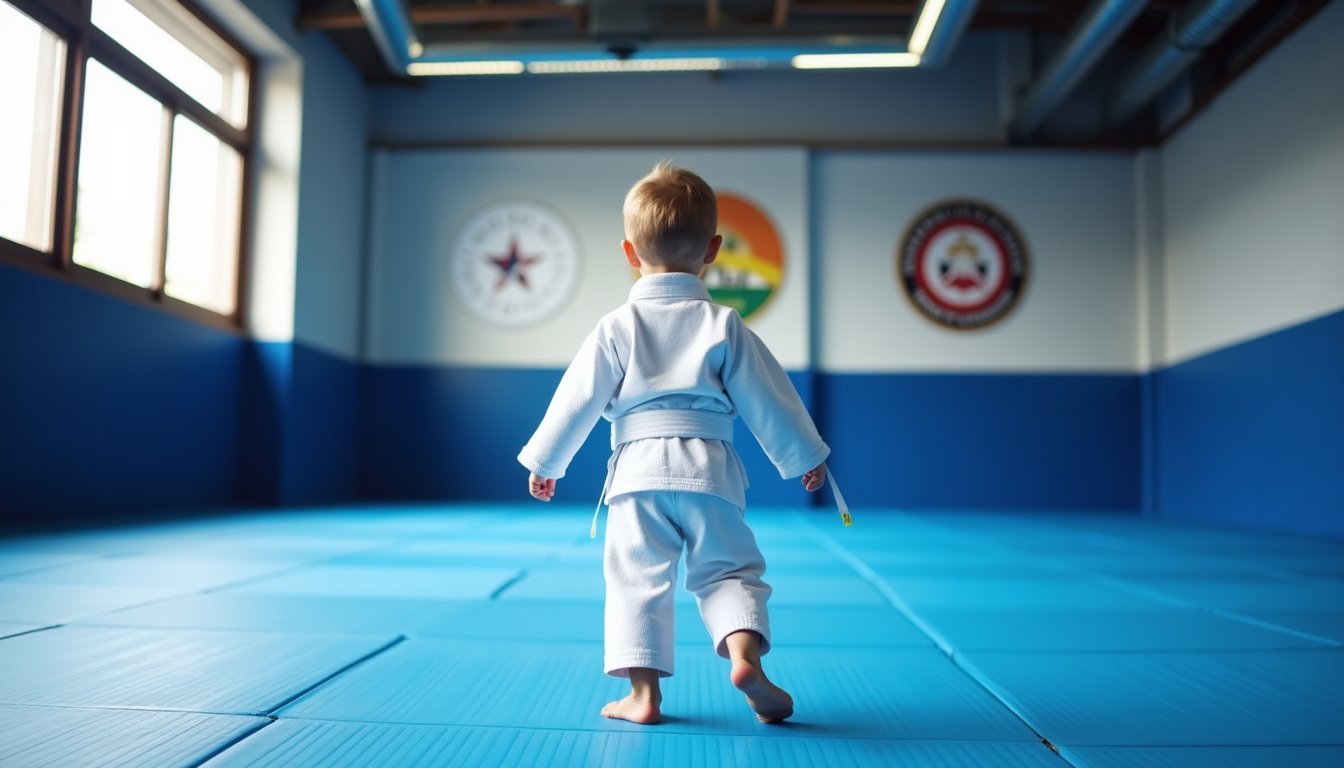
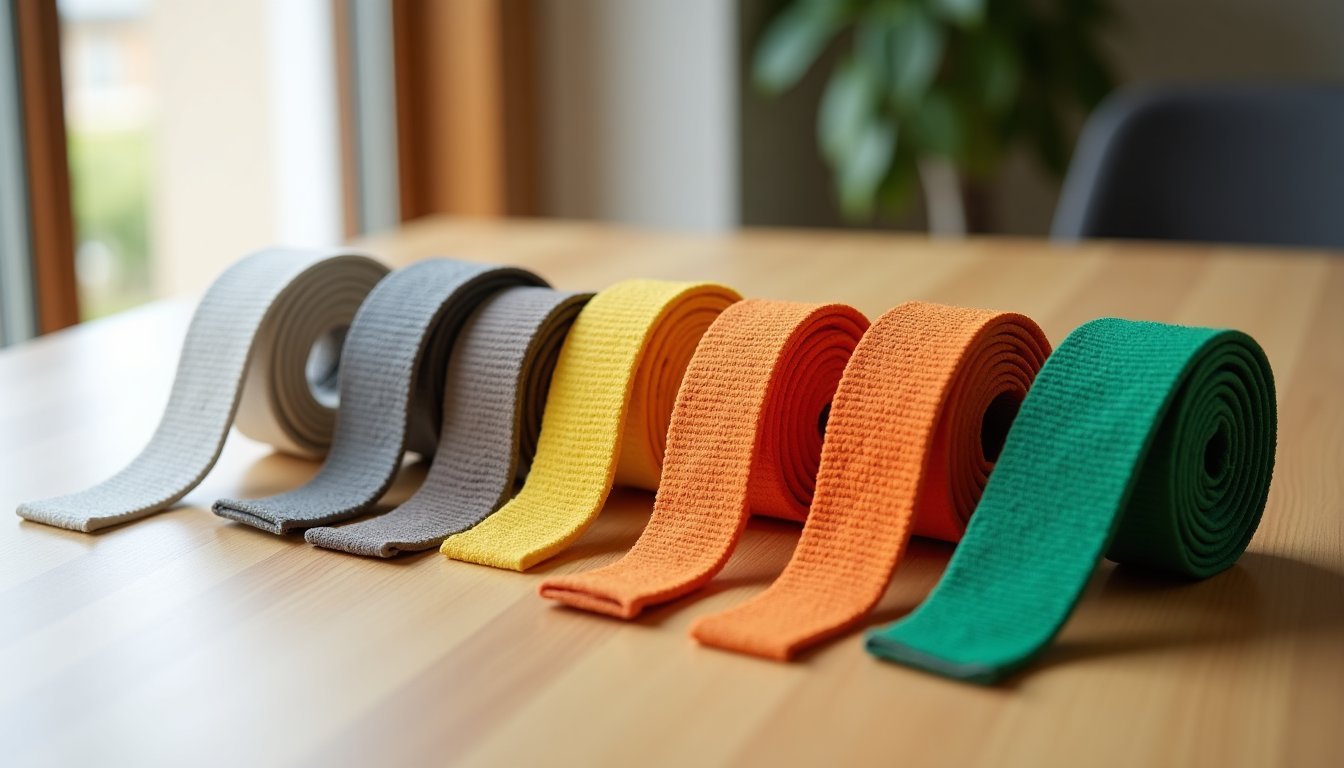
The kids BJJ belt system includes thirteen distinct ranks with unique colors like grey, yellow, and orange that don't exist in adult divisions. Children progress through white, grey, yellow, orange, and green belts, each with up to four stripes, typically spending six to twelve months at each level depending on training frequency and individual development.
If you're a parent researching Brazilian Jiu-Jitsu for your child in Boca Raton or anywhere else, understanding this system helps you set realistic expectations and celebrate your child's achievements along the way.
How the children's belt ranking system differs from adults
The adult BJJ belt system consists of five belts: white, blue, purple, brown, and black. Children under sixteen, however, follow a different path with thirteen possible ranks before transitioning to the adult system.
This extended progression exists for good reasons. Kids develop motor skills, understanding, and physical abilities at different rates than adults. The children's system breaks down what would be years-long adult belt levels into smaller, more achievable goals that keep young students motivated.
When your child trains at a BJJ academy, they start with a white belt regardless of age. From there, the path diverges based on whether they're in the younger group (typically ages 4-7) or the older kids' division (ages 8-15), though exact age cutoffs vary by organization.
The International Brazilian Jiu-Jitsu Federation established these standards, and most academies worldwide follow similar structures. Some schools add their own details, but the core framework remains consistent.
Complete breakdown of kids' belt colors and order
The full sequence of children's belts includes these colors in order:
Each of these belts except white has four possible stripe levels (one through four), plus the solid belt with no stripes. That creates the thirteen total ranks in the system.
So your child's complete journey looks like this: white belt, grey belt, grey with one stripe, grey with two stripes, grey with three stripes, grey with four stripes, yellow belt, yellow with stripes (same pattern), orange belt with its stripes, and finally green belt with its progression.
Age restrictions for each belt level
The system includes specific age minimums to ensure kids aren't rushed through ranks before they're developmentally ready:
| Belt Color | Minimum Age | Maximum Age | Typical Duration |
|---|---|---|---|
| White | 4 years | 15 years | 6-12 months |
| Grey | 4 years | 15 years | 6-12 months per stripe |
| Yellow | 7 years | 15 years | 6-12 months per stripe |
| Orange | 10 years | 15 years | 6-12 months per stripe |
| Green | 13 years | 15 years | Until 16th birthday |
A seven-year-old training consistently might reach yellow belt, but they can't receive an orange belt until they turn ten, even if their skill level warrants it. This prevents young kids from advancing too quickly and ensures maturity develops alongside technique.
What each stripe and belt promotion actually represents
When you see your child receive a stripe on their belt, that small piece of tape carries specific meaning. Each stripe represents a measurable improvement in a set of skills your instructor has been watching.
At white belt, your child learns to move safely on the mat, understand basic positions like guard and mount, and follow class structure. They're building a foundation of movement patterns and learning the difference between playing and drilling technique.
The first belt promotion to grey acknowledges that your child can now perform fundamental movements with some consistency. They can demonstrate a basic armbar from guard, execute a simple sweep, and understand the concept of maintaining position.
Each subsequent stripe requires your child to expand their technique repertoire and show improvement in execution quality. By the time a student reaches orange or green belt, they're demonstrating combinations, recognizing when to apply specific techniques, and showing problem-solving ability during live training.
Technical skills required at each level
While specific requirements vary by academy, here's what instructors typically evaluate:
Beyond technique, instructors watch for maturity indicators. Does your child show respect to training partners? Do they control intensity appropriately? Can they handle losing without frustration?
These character elements matter as much as technical skill, especially in the kids' program where building good people ranks alongside building good grapplers.
How long progression takes from white to green belt
If your child starts training at age seven and attends class two to three times per week consistently, they might reach green belt by age fourteen or fifteen. That's roughly seven to eight years of training, which sounds long but represents appropriate development.
Some kids progress faster, especially those who train four or more times weekly, compete regularly, and show exceptional dedication. Others take longer, which is completely normal and not a reflection of potential or worth.
The key word is consistency. A child who trains twice a week for five straight years will progress much further than one who trains five times a week for six months, then takes a year off, then returns sporadically.
Factors that influence promotion timeline
Several elements affect how quickly your child moves through the belt system:
Don't compare your child's timeline to others in the gym. The student who gets their yellow belt after eighteen months isn't better than your child who took two years. They're on different journeys with different starting points and different lives outside the academy.
Promotion ceremonies and what to expect
Belt promotions at most BJJ academies follow certain traditions that might seem unusual if you're coming from other martial arts like karate or taekwondo.
There's typically no formal testing or examination day. Instead, your child's instructor evaluates them continuously during regular classes over months of observation. When the instructor determines your child has met the requirements, they announce the promotion.
Many academies hold belt ceremonies every few months where all students receiving stripes or new belts get recognized together. Your child stands in front of the class, receives their new belt or stripe, and often receives light congratulatory taps from classmates in a tradition called the gauntlet (though this is often modified or skipped for younger kids).
Some schools keep promotions more low-key, adding a stripe at the end of class without ceremony. Neither approach is better; they're just different academy cultures.
What matters is that your child understands the promotion represents months of effort and improvement, not just participation or attendance.
Transitioning from kids' belts to the adult system
When your child turns sixteen, they transition from the children's belt system to the adult ranking structure. This doesn't mean starting over at white belt in most cases.
A child who reaches green belt typically receives a blue belt when they turn sixteen, assuming they've maintained their training and skill level. The exact conversion depends on their final kids' rank and overall proficiency:
This transition acknowledges that a fifteen-year-old green belt has spent years developing skills equivalent to an adult blue belt in many cases.
That said, the jump from kids' to adults' program brings new challenges. The pace increases, the intensity rises, and your teenager now trains with fully grown adults who might outweigh them by fifty pounds or more.
Some sixteen-year-olds thrive immediately. Others need time to adjust to the physical and mental demands of adult-level training. Both responses are normal.
Common mistakes parents make about the belt system
When you first enter the BJJ world with your child, certain misunderstandings about the belt system are nearly universal. Here's what to avoid:
Focusing too much on belt color
The biggest mistake is treating belts as the goal rather than the byproduct of learning. When parents constantly ask 'when will you get your next stripe?' or compare their child's rank to others, it shifts focus from skill development to external validation.
Your child will internalize your priorities. If you celebrate technique improvements, creative problem-solving during rolls, and good sportsmanship, they'll value those things. If you only celebrate new belts, they'll become focused on rank rather than growth.
Expecting predictable timelines
Some parents research average promotion times and then treat them as guaranteed schedules. When their child doesn't receive a stripe or belt within that timeframe, they feel concerned or even frustrated with the instructor.
No two children progress identically. The six-to-twelve-month guidance is an average that includes kids training five times per week and kids training once a week, kids who compete and kids who don't, kids with prior grappling experience and kids discovering physicality for the first time.
Comparing kids to each other
You'll see a ten-year-old yellow belt in your child's class, and you'll see another ten-year-old orange belt. Avoid the temptation to wonder why there's a difference or to mention it to your child.
One might have started training at age five while the other started at nine. One might train four times weekly while the other manages twice. One might have older siblings who wrestle while the other is learning body awareness from scratch.
The only meaningful comparison is your child against their own past performance.
Pressuring kids to compete for faster promotion
Competition absolutely accelerates learning for many students. Testing skills against unfamiliar opponents from other academies reveals gaps and builds confidence.
But competition isn't for everyone, and it shouldn't become a requirement you impose because you heard it speeds up belt progression. Some kids love tournaments and ask to compete monthly. Others find them stressful and prefer to develop skills in the academy environment.
Both paths lead to black belt eventually. Let your child's personality and preferences guide the decision, with your support either way.
Best practices for supporting your child's progression
You can't roll for your child or learn the techniques for them, but you play a crucial role in their BJJ journey. Here's how to help:
How instructors evaluate kids for belt promotions
Understanding what your child's instructor watches for might ease some anxiety around promotions. The evaluation isn't mysterious or arbitrary.
Instructors observe during every class, taking mental notes about technical execution, understanding of concepts, and character development. They're watching whether your child can perform techniques during drilling and whether they can apply them during live training against resistance.
They notice how your child treats training partners, especially smaller or newer students. They observe whether your child listens during instruction, asks thoughtful questions, and shows respect for the gym rules and culture.
Most instructors keep informal records or use academy software to track who received their last stripe when, how attendance has been, and what technical areas each student needs to improve. This helps ensure fair, consistent promotion standards across all students.
When promotion time approaches, the instructor considers the whole picture: technical ability, time in grade, age appropriateness, character development, and whether the student is ready for the increased responsibility and expectations of the next rank.
Why some kids wait longer than expected
If your child seems stuck at a belt level longer than you anticipated, several factors might explain it:
If you're genuinely confused about your child's promotion timeline after months pass, you can politely ask the instructor for insight. Frame it as seeking guidance on what your child should work on, not questioning the instructor's judgment.
Most instructors appreciate parents who want to understand and support their child's development, as long as you approach with genuine curiosity rather than entitled demand.
What happens when kids skip belt levels
In rare cases, a child might skip a belt or multiple stripes if they've trained extensively elsewhere, returned after a long break with retained skills, or demonstrate exceptional ability for their age.
This happens less in BJJ than in some other martial arts, but it's not unheard of. An eleven-year-old who spent three years earning yellow belt, then took two years off for other sports, then returned might be promoted straight to orange if their skills warrant it and they meet the age requirement.
Similarly, a child training five or six days per week with clear competition success might move through stripes faster than the typical six-month pace per stripe.
But skipping ranks is never guaranteed and shouldn't be expected. The system exists as it does for good developmental reasons, and most instructors prefer students to progress through each level even if they could technically handle skipping ahead.
Differences between organizations and academies
While the IBJJF standards provide a framework, you'll notice variations between BJJ schools in how they implement the kids' belt system.
Some academies follow IBJJF guidelines precisely. Others use similar belt colors but different age cutoffs or stripe requirements. A few add extra ranks or use different colors entirely within their own organization.
These differences don't indicate that one school is better or more legitimate than another. They reflect different teaching philosophies and organizational affiliations.
What matters more than the exact belt colors is whether the academy has clear, consistent standards and whether they're developing your child's skills and character effectively.
How to verify legitimate ranking standards
If you're evaluating a BJJ academy for your child, here's what legitimate belt systems have in common:
Be skeptical of schools that guarantee a belt level within a specific timeframe, charge fees for belt testing, or promote kids to ranks beyond their age eligibility according to standard organizations.
Step-by-step: preparing your child for their next promotion
While you can't force promotion, you can help your child put their best foot forward. Here's how:
The role of competition in belt progression
You'll hear different opinions about competition and whether it affects promotion. The truth is nuanced.
Competition doesn't directly cause promotion, but it does provide your child with valuable experiences that often accelerate technical development. Rolling against someone from another academy who uses different techniques exposes gaps in your child's game.
Winning validates what they've learned and builds confidence. Losing reveals what needs work and builds resilience. Both outcomes teach lessons you can't get from regular class alone.
That said, plenty of kids reach green belt and eventually black belt without ever competing. Competition is one path to development, not the only path.
Some instructors factor competition performance into promotion decisions as one of many data points. Others don't consider it at all, focusing purely on what they observe in class.
If your child wants to compete, support that. If they don't, support that too. Don't push competition as a promotion strategy.
Current trends in kids' BJJ rank development
The children's belt system continues evolving as the BJJ community learns what works best for long-term student development and retention.
More academies in 2026 are implementing structured curriculum frameworks where specific techniques are taught at each belt level, creating clearer roadmaps for progression. This helps kids understand what they need to learn next and gives parents better visibility into the system.
There's also growing emphasis on conceptual understanding rather than just technique memorization. Modern kids' programs increasingly teach the 'why' behind moves, not just the mechanical steps, helping students develop problem-solving abilities that serve them throughout their BJJ careers.
Digital tools are changing how some academies track progression. Apps that let parents and students see technique requirements for the next belt, record attendance, and log what was taught in each class are becoming more common.
The trend toward viewing BJJ as lifelong practice rather than a childhood activity is also influencing belt philosophy. Instructors increasingly focus on building sustainable habits and genuine love for the art rather than rushing kids through ranks to satisfy impatient parents.
Key insights about the kids bjj belt system
The children's belt progression in Brazilian Jiu-Jitsu serves developmental purposes beyond just marking skill level, creating appropriate milestones for growing athletes over years of training.
What you need to remember
Your action checklist
The next step is simple: if your child isn't training yet, visit our Boca Raton academy to watch a kids' class and see the belt system in action. If they're already training, focus this week on attending consistently and approaching each class with curiosity about what they'll learn rather than when they'll get promoted.
Step-by-step: preparing your child for their next promotion
Helping your child advance through the belt system requires consistent support and realistic expectations about the promotion process.
- Establish a regular training schedule with at least two classes per week to build consistency and allow your child to retain techniques between sessions.
- Review basic techniques at home by asking your child to demonstrate what they learned in class, reinforcing their understanding without pressuring them to perform perfectly.
- Attend classes occasionally to observe what skills the instructor emphasizes for your child's current belt level and understand the specific requirements.
- Encourage your child to ask questions during class when they don't understand a technique rather than waiting until they get home.
- Track attendance and progress informally by noting which techniques your child mentions or demonstrates most confidently over time.
- Communicate with the instructor about your child's development during designated parent conversation times, not immediately before or after class.
- Prepare your child emotionally by explaining that promotions happen when they're ready, not on a fixed schedule, helping them focus on learning rather than the belt itself.
Frequently asked questions
How long does it take to get a black belt in BJJ starting as a kid?
If a child starts training at age seven and progresses consistently, they typically reach adult black belt between ages twenty-three and twenty-eight. That's roughly sixteen to twenty-one years of training, accounting for the children's belt system through age fifteen, then the standard adult progression of blue, purple, brown, and black.
Can my child compete at tournaments with a kids' belt?
Yes, most BJJ tournaments have divisions specifically for children at each belt level from white through green. Your child competes against others of similar age, weight, and belt rank, making competition accessible and appropriate throughout their development.
Do all BJJ academies use the same kids' belt colors?
Most academies follow the IBJJF standard of white, grey, yellow, orange, and green, but variations exist. Some organizations use different colors or add intermediate ranks. What matters is that the school has consistent, age-appropriate standards rather than the exact colors used.
Can my child wear their gi belt outside of class?
While not prohibited, wearing the gi belt casually outside the academy isn't typical BJJ culture. The belt represents what happens on the mat, and most practitioners only wear it during training to preserve its meaning and keep it clean for class.
What happens if we switch academies to a different belt system?
Most instructors will evaluate your child's actual skill level and place them at the appropriate rank in their system, which may or may not match the belt color they wore previously. Honest conversation with the new instructor about your child's experience and training history helps ensure proper placement.
Does my child need to test for belt promotions?
Most BJJ academies don't require formal testing for children's belts. Instructors evaluate students continuously during regular classes. Some schools hold demonstration events where students show techniques, but this is typically celebratory rather than pass-or-fail testing.
How many stripes can a child earn on each belt?
Children can earn up to four stripes on grey, yellow, orange, and green belts. After receiving the fourth stripe, the next promotion is typically to the next belt color rather than a fifth stripe, assuming the child meets age requirements.
Is it bad if my child takes longer than others to get promoted?
No, longer progression timelines are completely normal and not a negative indicator. Children develop at different rates physically, mentally, and technically. What matters is that your child is learning, enjoying training, and improving relative to their own past performance.
Can a child skip from white belt directly to yellow or orange?
While technically possible in rare circumstances, most instructors prefer children to progress through each belt level. Skipping ranks might happen if a child returns after extended time away with skills intact, but it's uncommon and shouldn't be expected.
Do girls and boys follow the same belt progression?
Yes, the children's belt system is identical regardless of gender. Girls and boys progress through the same belt colors with the same age requirements and technical standards at co-ed academies.
What if my child gets discouraged about slow progression?
Remind them that BJJ is a long-term journey where everyone progresses at their own pace. Help shift focus from belt color to specific skills they're improving. Connecting with their instructor about setting short-term technical goals can also help restore motivation.
Are there additional costs for belt testing or promotions?
Legitimate BJJ academies typically include promotions as part of regular membership without additional testing fees. Be cautious of schools that charge separate fees for belt exams, as this isn't standard practice in traditional Brazilian Jiu-Jitsu culture.
How often should my child train to progress at a normal pace?
Two to three classes per week represents the typical training frequency for steady progression. Training more often can accelerate development, while once-weekly attendance will slow progression but still produces learning and benefits over time.
Can my child get demoted or lose their belt rank?
Demotion is extremely rare in BJJ and typically only happens in cases of serious misconduct or if someone is found to have fraudulently obtained a rank. Children don't lose belts for skill regression or periods of inactivity.
What should my child do with old belts after promotion?
Many students keep old belts as mementos of their journey. Some display them at home, others store them with other BJJ memories. There's no requirement to keep them, but most practitioners find sentimental value in preserving their training history.
Does competing help kids get promoted faster?
Competition can accelerate learning by exposing students to different styles and testing skills under pressure, which may contribute to faster technical development. However, competition isn't required for promotion, and instructors primarily evaluate what they observe during regular class training.
How is the kids' belt system different from other martial arts?
BJJ's children's belt system emphasizes longer time at each rank compared to many martial arts, focuses on live training effectiveness rather than forms or patterns, and doesn't typically involve formal testing. The progression is generally slower and more focused on practical skill development.
What does my child need to know to move from white to grey belt?
Basic white-to-grey promotion typically requires demonstrating fundamental positions (guard, mount, side control), basic escapes from those positions, one or two simple submissions like an armbar or rear naked choke, understanding of how to move safely during drilling, and appropriate behavior and respect during class.